How IoT Makes Everyday Operations Smarter and Faster
 |
06 November 2025
|
06 November 2025
Introduction
In today’s hyperconnected world, efficiency and intelligence are at the heart of every successful business. From manufacturing floors to retail outlets, the need for data-driven decision-making and automation has never been greater. This is where IoT for business is transforming how organizations operate.
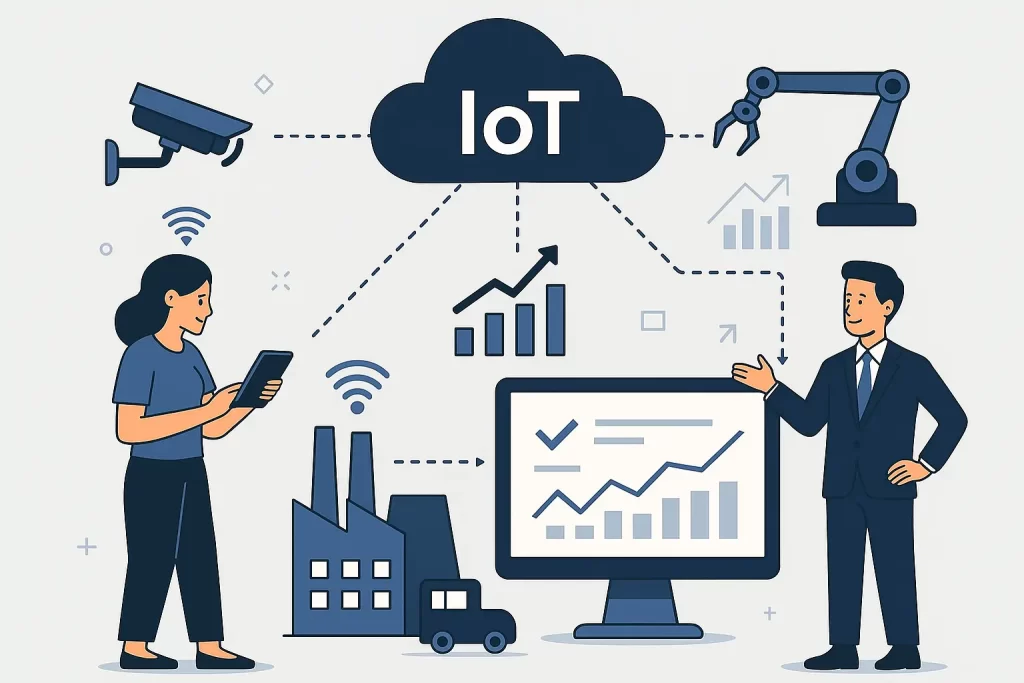
The Internet of Things (IoT) connects machines, devices, and systems through sensors and cloud platforms, enabling real-time communication and smarter workflows. What once required manual monitoring, delayed reporting, or guesswork can now be done instantly and accurately — making everyday operations smarter, faster, and more reliable.
The Power of IoT for Business
IoT isn’t just about connecting devices; it’s about creating an intelligent ecosystem where everything works together seamlessly. For businesses, this means turning data into actionable insights that improve productivity, safety, and profitability.
• Real-Time Monitoring: IoT devices continuously collect and share data from machines, assets, and environments, allowing managers to make faster, informed decisions.
• Predictive Maintenance: Sensors detect equipment irregularities before breakdowns occur, reducing downtime and extending asset life.
• Automation: Connected systems streamline workflows, minimizing human intervention and improving accuracy.
• Energy Efficiency: IoT solutions optimize energy usage across facilities, reducing waste and operational costs.
By integrating IoT into daily business operations, companies can enhance their agility, accuracy, and responsiveness — gaining a significant edge in competitive markets.
How IoT Makes Operations Smarter
The intelligence behind IoT for business lies in its ability to analyze data and make smart decisions autonomously.
• Smart Asset Management: IoT-powered sensors track the location, condition, and performance of assets in real-time, helping businesses manage resources efficiently.
• Data-Driven Insights: AI and IoT work together to identify trends, detect anomalies, and forecast demand, allowing businesses to plan proactively.
• Enhanced Quality Control: Automated quality checks ensure consistency in production and services, reducing human error.
• Connected Workforce: Employees can access IoT dashboards remotely, improving collaboration, transparency, and operational visibility.
With these smart capabilities, businesses not only save time and money but also create a foundation for continuous innovation.
How IoT Makes Operations Faster
Speed is the ultimate competitive advantage — and IoT delivers it by automating time-consuming processes.
• Instant Alerts and Notifications: IoT systems send immediate alerts about equipment malfunctions, safety risks, or workflow interruptions.
• Optimized Supply Chains: Real-time tracking of inventory and shipments ensures faster delivery and improved customer satisfaction.
• Seamless System Integration: IoT platforms integrate with ERP, CRM, and analytics tools, streamlining data flow across departments.
• Faster Decision-Making: With real-time data available at a glance, leaders can make confident business decisions without delays.
In essence, IoT turns traditional operations into agile ecosystems — where every action is faster, smarter, and more informed.
Industries Benefiting from IoT for Business
IoT’s flexibility allows it to adapt to virtually any industry. Some of the most notable use cases include:
• Manufacturing: Smart factories use IoT to monitor machines, control production lines, and minimize downtime.
• Retail: IoT sensors track inventory, predict stock needs, and enhance in-store customer experiences.
• Healthcare: Remote monitoring and connected medical devices improve patient care and hospital efficiency.
• Logistics and Supply Chain: Real-time tracking ensures transparency, safety, and timely deliveries.
• Smart Buildings: IoT automates lighting, HVAC systems, and security for energy efficiency and comfort.
Regardless of industry, the impact is consistent — faster operations, reduced costs, and smarter decision-making.
The Future of IoT for Business
The future of IoT is driven by intelligence and interconnectivity. As 5G, AI, and edge computing continue to evolve, IoT will enable businesses to move from reactive to predictive operations. Imagine factories that self-diagnose issues, logistics systems that auto-correct delays, or smart cities that manage energy use autonomously — all powered by IoT.
For forward-thinking companies, adopting IoT is no longer optional; it’s essential for long-term competitiveness and innovation.
Conclusion
IoT is revolutionizing how businesses operate — making everyday tasks more efficient, decisions more data-driven, and systems more responsive. From automation and monitoring to analytics and optimization, IoT for business empowers organizations to achieve more with less effort.
If your goal is to make operations smarter, faster, and more sustainable, now is the time to embrace IoT. The smarter your systems, the stronger your business becomes.