Strategic Management: Why It Is Essential for Long-Term Business Success
 |
20 December 2025
|
20 December 2025
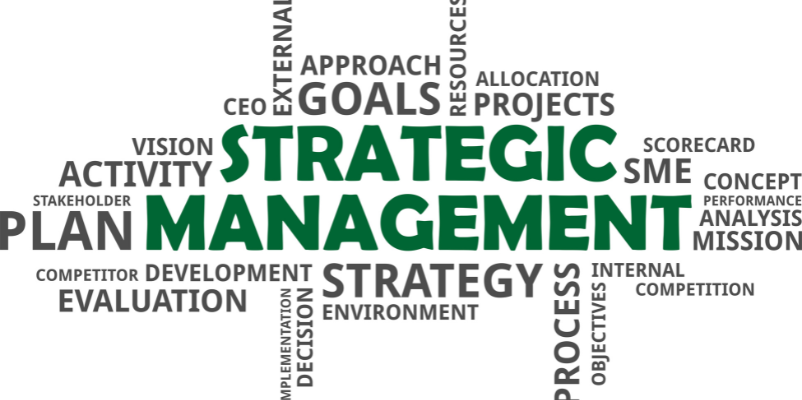
In an era where business environments change rapidly, relying on experience or intuition alone is no longer enough. Organizations face constant shifts in technology, competition, customer behavior, and regulations. Strategic management helps businesses navigate this uncertainty by providing a structured approach to planning, execution, and long-term growth.
Rather than focusing only on daily operations, strategic management aligns vision, resources, and actions to ensure sustainable success.
1. Creates Clear Vision and Organizational Focus
Strategic management defines where an organization is headed and how it plans to get there. It translates broad vision into achievable objectives, ensuring everyone understands:
- The organization’s long-term goals
- Key priorities and success measures
- Their individual contribution to the bigger picture
This clarity improves coordination and reduces wasted effort.
2. Promotes Proactive Rather Than Reactive Leadership
Organizations without a strategy often respond to problems only after they arise. Strategic management encourages leaders to:
- Analyze industry trends early
- Anticipate risks and disruptions
- Identify growth opportunities in advance
By planning ahead, companies gain stability and confidence in decision-making.
3. Improves the Quality of Decision-Making
Strategic management provides a framework for consistent and informed decisions. Leaders rely on:
- Market and competitor analysis
- Internal performance data
- Clearly defined priorities
This reduces guesswork and ensures decisions support long-term goals rather than short-term fixes.
4. Enhances Overall Organizational Performance
A strong strategy improves performance by aligning resources with objectives. Strategic management helps organizations:
- Allocate budgets and talent effectively
- Set measurable targets
- Reduce inefficiencies across departments
When teams know what success looks like, productivity and accountability improve.
5. Increases Adaptability in a Changing Business Environment
Change is unavoidable—whether due to digital transformation, economic shifts, or regulatory updates. Strategic management enables organizations to remain flexible by:
- Continuously monitoring external conditions
- Adjusting plans based on real-time insights
- Encouraging innovation and resilience
Adaptable organizations are better positioned to survive and grow.
6. Builds Sustainable Competitive Advantage
Through tools such as SWOT analysis, strategic management helps companies understand their strengths and weaknesses relative to competitors. This insight allows businesses to:
- Differentiate through innovation or service quality
- Improve operational efficiency
- Strengthen brand positioning
Sustainable advantage comes from deliberate, long-term planning—not chance.
7. Aligns and Motivates Employees
Employees perform better when they understand the organization’s direction. Strategic management improves engagement by:
- Linking individual roles to company goals
- Clarifying expectations and performance metrics
- Creating a shared sense of purpose
This alignment boosts morale, ownership, and collaboration.
Conclusion
Strategic management is an ongoing process—not a one-time exercise. It involves setting direction, analyzing internal and external environments, making informed decisions, and continuously adapting to change. Organizations that embrace strategic management are better equipped to grow sustainably, manage risks, and remain competitive.
Modern platforms like Zlendo Suite can support strategic management by helping organizations streamline planning, track performance, and align teams with long-term objectives—all from a centralized system designed for clarity and efficiency.
Businesses that invest in strategic management don’t just react to the future—they shape it.
Disclaimer
This article does not constitute professional business, financial, or management consulting advice. Organizational strategies should be developed based on individual business conditions, expert consultation, and industry-specific require