How AI Attendance Systems Eliminate Payroll Errors and Improve Accuracy
 |
28 November 2025
|
28 November 2025

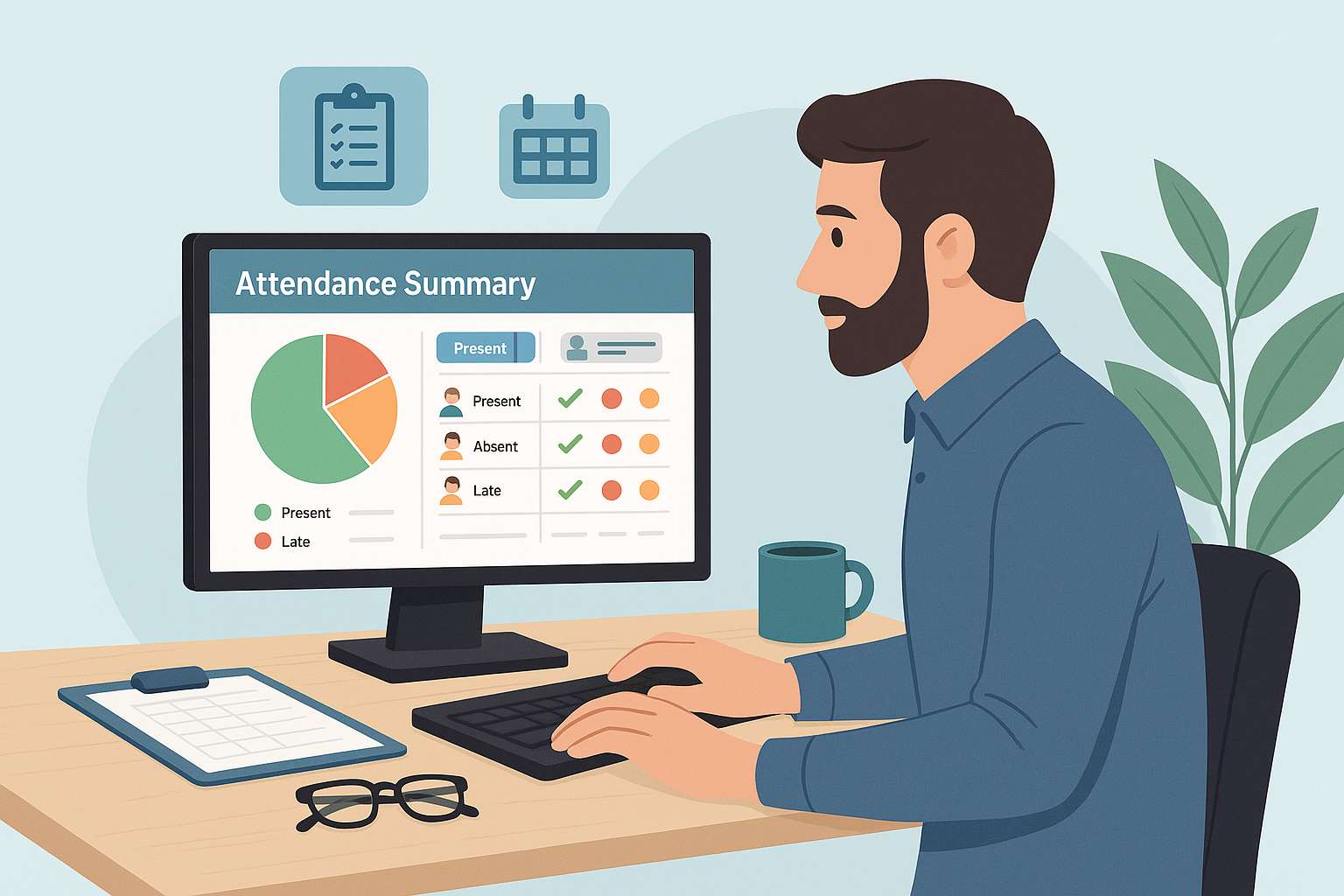
An attendance system and payroll accuracy now go hand in hand for modern businesses aiming to eliminate salary discrepancies and workforce inefficiencies in 2025. As organizations scale and adopt hybrid work models, even small gaps in attendance tracking can lead to major payroll disruptions, delayed salary processing, and growing employee dissatisfaction. Manual attendance methods and disconnected payroll tools remain the biggest causes of recurring payroll errors across industries.
With flexible shifts, remote teams, and increasing compliance pressure, companies are rapidly shifting toward AI-powered attendance systems that offer real-time tracking, automated validation, and seamless payroll integration—ensuring consistent salary accuracy and full operational transparency.
The Critical Role of an Attendance System in Payroll Accuracy
Every payroll calculation begins with attendance data. A modern attendance system records:
- Daily working hours
- Shift adherence
- Late arrivals and early departures
- Overtime
- Leave and holiday usage
If even one of these data points is inaccurate, payroll results are automatically affected. In traditional setups, attendance is often entered manually or captured through isolated biometric devices. This creates multiple points of failure and frequently leads to salary disputes, reprocessing, and loss of HR credibility.
Automated attendance platforms establish a single source of truth for payroll processing, significantly improving salary accuracy.
Understanding Payroll Errors in Today’s Organizations
Payroll errors occur when employees receive incorrect compensation due to mismatched attendance data, incorrect calculations, or policy misapplication. Common payroll errors include:
- Overpayment or underpayment
- Incorrect overtime calculation
- Missed leave deductions
- Wrong shift allowance
- Late salary processing
- Statutory compliance mismatches
The most frequent causes include:
- Manual data entry
- Disconnected attendance and payroll tools
- Proxy attendance (buddy punching)
- Delayed attendance approvals
- Human calculation mistakes
Even a small percentage of payroll errors repeated across monthly cycles can result in serious financial and reputational damage.
How an AI-Based Attendance System Works
An AI-powered attendance system uses machine learning, facial recognition, geolocation, and automation to ensure real-time, tamper-proof attendance capture. It performs:
- Instant identity verification
- Real-time location validation
- Automated shift enforcement
- Policy-based overtime calculation
- Attendance anomaly detection
- Direct payroll synchronization
Unlike traditional tools, AI continuously learns from behavioral patterns and improves data accuracy over time.
AI Attendance System vs Traditional Methods: Summary Table
| Feature | Traditional Attendance System | AI-Based Attendance System |
| Attendance Capture | Manual / basic biometric | AI-powered digital tracking |
| Data Accuracy | Moderate | Very High |
| Overtime Calculation | Manual | Automated |
| Proxy Attendance | Possible | Prevented |
| Payroll Integration | Partial / manual | Fully automated |
| Payroll Errors | Frequent | Minimal |
| Compliance Support | Limited | Strong |
| Real-Time Reporting | No | Yes |
| Remote Work Support | Weak | Strong |
| Scalability | Limited | Highly scalable |
How AI Attendance Systems Reduce Payroll Errors
1. Real-Time Data Validation
AI validates attendance at the time of capture. Any duplication, missing entry, or irregular pattern is immediately flagged before payroll processing begins.
2. Automated Overtime Calculation
Overtime is computed automatically based on predefined company and statutory rules. This removes one of the biggest sources of payroll errors.
3. Elimination of Proxy Attendance
Facial recognition and GPS-based verification prevent buddy punching and false attendance entries.
4. Direct Payroll Synchronization
Attendance data flows directly into the payroll engine without manual transfer, eliminating human data-entry mistakes.
5. Policy-Based Salary Processing
All salary rules are applied uniformly across employees, ensuring consistent payroll output.
Attendance System and Statutory Compliance Accuracy
Accurate attendance also forms the foundation of statutory compliance. AI-based attendance systems help businesses comply with:
- Daily and weekly working hour regulations
- Overtime laws
- Leave entitlement rules
- Public holiday policies
- Shift differential payments
- Labour audit requirements
With clean attendance data, compliance-related payroll errors and penalties are drastically reduced.
Impact on HR and Payroll Operations
An AI attendance system transforms HR and payroll operations by:
- Reducing manual intervention
- Cutting payroll processing time
- Minimizing salary correction cycles
- Enhancing audit readiness
- Increasing employee trust in payroll
- Enabling real-time salary insights
Payroll teams shift from reactive error correction to proactive payroll governance.
Managing Payroll Errors in Hybrid and Remote Work Environments
Hybrid and remote work have exposed the weaknesses of traditional attendance tracking. AI-based systems solve this through:
- Mobile attendance with GPS validation
- Cross-location work-hour tracking
- Automated time-zone handling
- Digital shift enforcement
- Secure cloud-based data access
This ensures that payroll errors caused by remote work ambiguity are virtually eliminated.
Business Benefits of Eliminating Payroll Errors
Organizations that successfully reduce payroll errors experience:
- Higher employee satisfaction
- Stronger employer credibility
- Reduced legal and compliance risk
- Lower operational costs
- Better financial forecasting
- Improved workforce morale
Accurate payroll directly impacts employee engagement and retention.
Data Security and Ethical Control in AI Attendance Systems
Modern attendance platforms ensure:
- Encrypted data storage
- Role-based access control
- Secure audit trails
- Data protection compliance
- Ethical AI usage governance
Automation improves payroll accuracy without compromising employee privacy.
Future of Attendance Systems and Payroll Accuracy
The future of the attendance system will include:
- Predictive absenteeism analysis
- Intelligent workforce forecasting
- Behavioral work-pattern analytics
- Deep integration with payroll, performance, and compliance
- Voice and motion-enabled attendance
As automation deepens, payroll errors are expected to drop to near-zero levels across digitally mature organizations.
Conclusion
In 2025, an intelligent attendance system is no longer optional—it is essential for ensuring payroll accuracy and eliminating persistent payroll errors. AI-based attendance management delivers real-time tracking, automated validation, overtime precision, and seamless payroll integration that traditional systems simply cannot match. Organizations continuing with manual attendance and disconnected payroll tools face growing financial leakage, compliance exposure, and declining employee trust.
In this advanced HR technology landscape, Zlendo plays a powerful role by offering a unified platform that integrates AI-based attendance tracking with automated payroll processing, statutory compliance, shift scheduling, and real-time analytics. With features like mobile attendance with GPS, automated overtime calculation, error-free salary processing, and compliance-ready reporting, Zlendo enables businesses to eliminate payroll errors while building a transparent, accurate, and future-ready workforce ecosystem.
Disclaimer
The information shared here is intended solely for public awareness and editorial reference. The technologies and benefits discussed reflect general industry practices and adoption trends. Actual performance of any attendance system and its impact on payroll accuracy and payroll errors may vary based on organizational policies, data quality, statutory regulations, and system configuration. This content does not constitute legal, financial, or payroll consultancy advice.