
How to Add a New Employee in the HRMS ?
 |
11 November 2025
|
11 November 2025
Introduction
Adding a new employee to your organization is more than just entering details into a system — it’s about creating a meaningful first impression. A structured employee onboarding process ensures that new hires feel welcomed, informed, and ready to perform from their first day.
Modern HRMS (Human Resource Management Systems) make this easier by automating the onboarding process, eliminating repetitive manual work, and ensuring a consistent and engaging experience for every new joiner.
Here’s how you can smoothly add a new employee in your HRMS and build a seamless onboarding experience.
Pre-Boarding Stage
The employee onboarding process begins even before the first day. HR teams can use the HRMS to handle pre-boarding activities that make the transition smooth and stress-free.
This includes sending offer confirmations, welcome messages, and digital forms for personal information. You can also share important company policies and documents through the HRMS, allowing new hires to complete paperwork online before joining.
Using digital workflows ensures a faster, paperless onboarding experience that helps employees focus on people, not paperwork, when they arrive.
Adding Employee Details in the HRMS
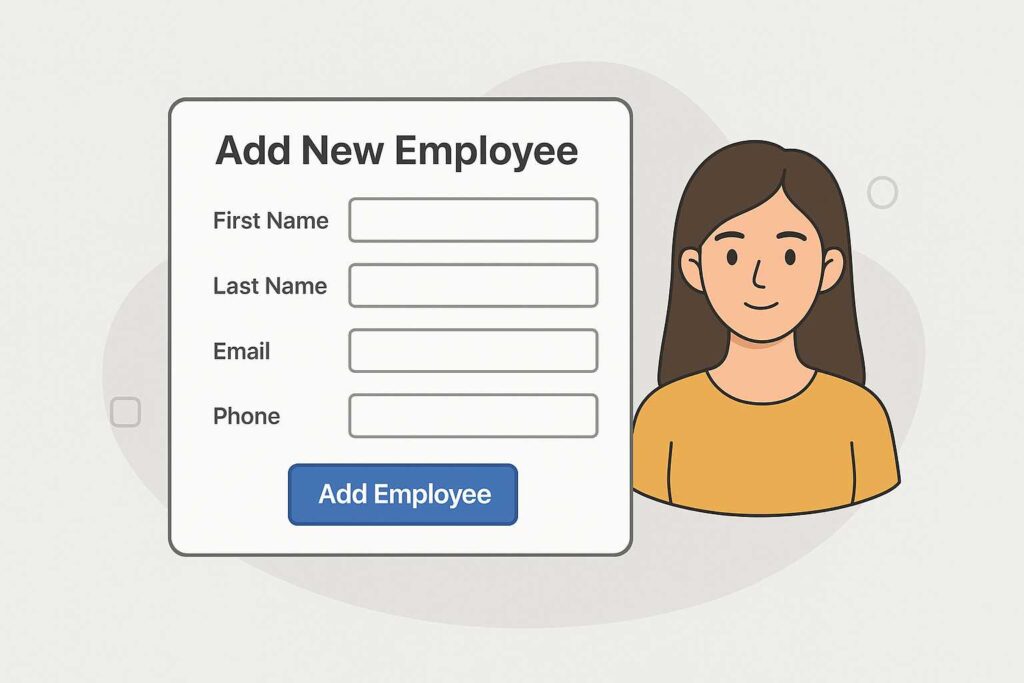
Once the candidate accepts the offer, the HR team can create their profile in the HRMS. This is the foundation of an efficient employee onboarding process.
The HRMS allows you to record essential personal details, job information, and compensation data, along with providing system credentials. Many platforms support automatic imports from recruitment tools, ensuring accuracy and saving valuable time.
Assigning Onboarding Tasks
A well-defined employee onboarding process includes assigning clear tasks to both HR and the new hire. Using the HRMS, you can create onboarding checklists that include document submission, orientation scheduling, training sessions, and IT setup.
Automated reminders can be configured so that every step is completed on time without manual follow-ups. This ensures a structured and consistent onboarding flow across all departments.
Setting Up Access and Tools
Before the new hire’s first day, it’s important to ensure they have access to all required tools and systems. Through the HRMS, HR can collaborate with IT and facilities teams to provide devices, set up user accounts, and assign system permissions.
Proper preparation prevents first-day delays and allows the employee to get started smoothly. It also strengthens the overall employee onboarding process
Welcoming the New Employee
The HRMS can help make the first day memorable. Send a personalized welcome message, share an introduction announcement with the team, and assign a buddy to help the employee settle in.
A thoughtful welcome fosters belonging and helps the employee connect with the company culture from the beginning. The employee onboarding process becomes more than an administrative task — it becomes a relationship-building opportunity.
Tracking Progress and Gathering Feedback
The onboarding journey continues beyond the first week. With HRMS tools, you can track task completion, monitor progress, and gather real-time feedback.
Using quick surveys and automated follow-ups, HR can understand how new hires feel about their onboarding experience and identify areas for improvement. This creates a continuous feedback loop that strengthens future onboarding programs.
Transitioning to Regular HR Operations
After onboarding is complete, employees automatically move into regular HR workflows such as attendance, payroll, and performance management. Since all data is already captured within the HRMS, there’s no need for duplicate entries.
This smooth transition helps maintain accuracy and ensures that new hires remain engaged as they settle into their roles.
Why HRMS Simplifies the Onboarding Process
A manual onboarding process can slow down productivity and increase the chances of errors. By using an HRMS, organizations can automate routine steps, save time, and deliver a professional, organized, and people-first experience.
With automation, HR teams spend less time on admin work and more time engaging with employees. The result is better retention, higher productivity, and a stronger employer brand.
Conclusion
Adding a new employee in the HRMS marks the beginning of their journey with your organization. A well-planned employee onboarding process ensures every hire feels prepared, connected, and valued from the start.
When onboarding is powered by automation, it becomes effortless, consistent, and memorable. It helps HR teams focus on what truly matters — building meaningful relationships and setting employees up for success.