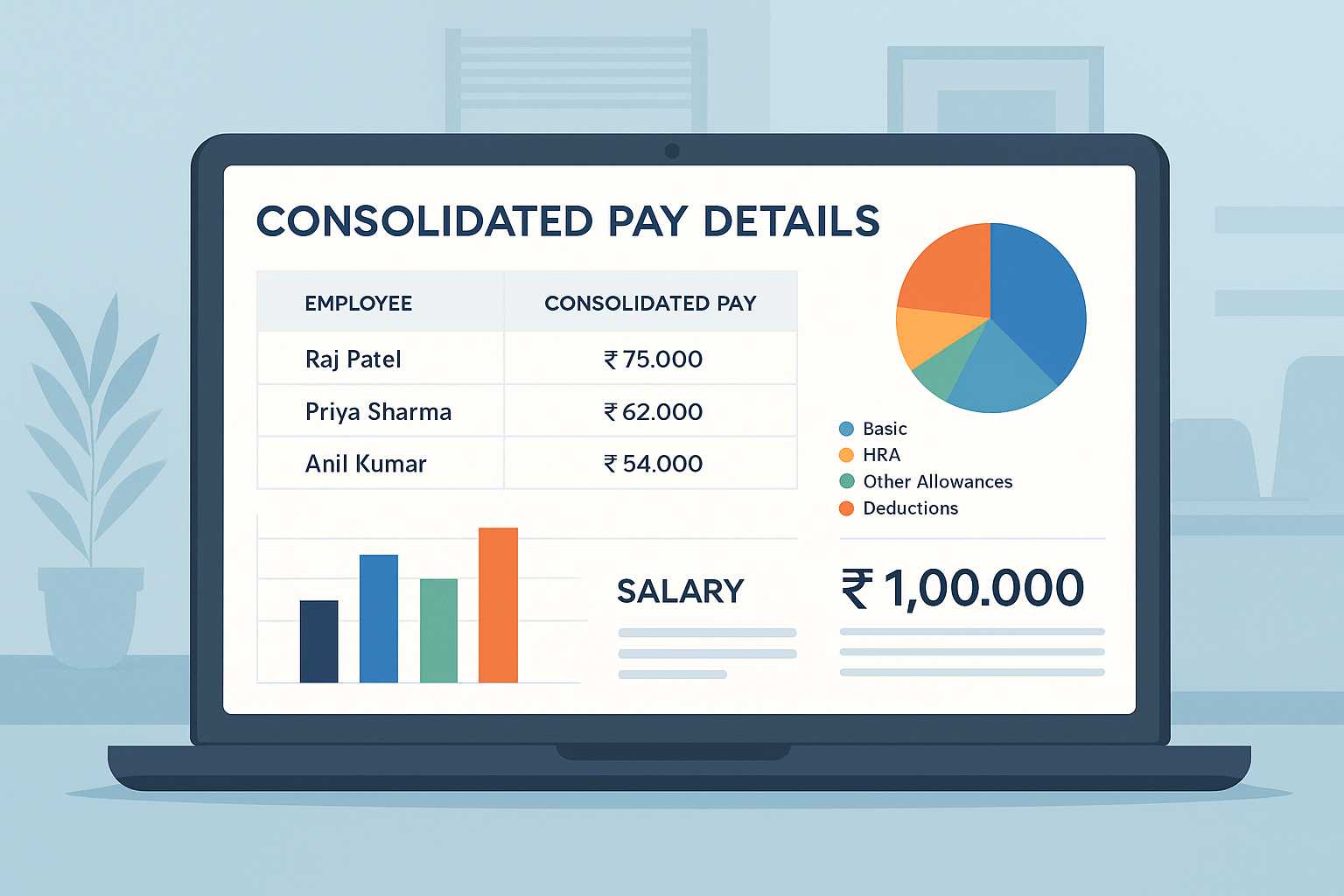
How To Generate Monthly Salary Reports?
 |
06 November 2025
|
06 November 2025
Introduction
Managing payroll is one of the most critical functions within any organization’s HR department. Accuracy, timeliness, and compliance are vital to maintaining employee satisfaction and legal integrity. However, manual payroll processing often results in delays, human errors, and repetitive administrative work. This is where HR payroll systems step in — offering automated solutions for salary calculations, deductions, and monthly report generation. In this blog, we’ll explore how to generate monthly salary reports using an HR payroll system, why it matters, and how automation transforms payroll management into a smooth, error-free experience.
What Is an HR Payroll System?
An HR payroll system is a digital solution that automates salary processing and connects payroll functions with other HR modules like attendance, leave, and compliance. It eliminates the need for manual spreadsheets and repetitive data entry by centralizing all payroll-related activities.
Core Functions of HR Payroll Systems
- Automates salary and deduction calculations
- Integrates attendance and leave data
- Generates monthly payroll reports
- Manages compliance (PF, ESI, TDS, PT)
- Tracks employee payment records
- Provides downloadable reports and payslips
By using an HR payroll system, HR teams can generate accurate salary reports in minutes instead of hours.
Why Monthly Salary Reports Matter
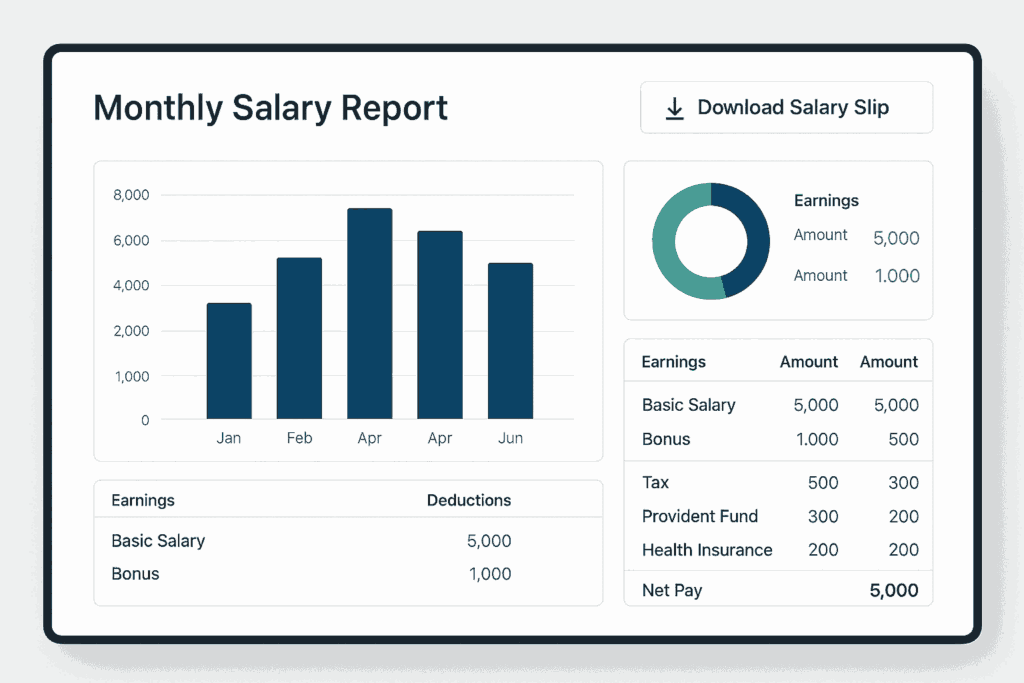
A monthly salary report is an essential HR document that summarizes employee earnings, deductions, and net payouts for a specific period. It plays a vital role in payroll transparency and financial planning.
Key Benefits of Monthly Salary Reports
- Transparency: Offers employees clarity on their earnings, deductions, and net pay.
- Compliance: Ensures payroll data aligns with tax laws and audit requirements.
- Efficiency: Reduces manual effort and payroll processing time.
- Decision Support: Provides financial insights into workforce costs and trends.
- Accountability: Keeps records ready for audits and management reviews.
A robust HR payroll system ensures these reports are automatically generated, accurate, and accessible.
Common Challenges in Manual Payroll Processing
Before automation, HR teams often struggled with repetitive data entry and calculation errors, complex tax deductions (PF, ESI, TDS), late salary approvals and disbursements, missing or inconsistent employee records, and lack of real-time visibility into payroll data. These challenges slow down the payroll cycle and increase compliance risks. With an HR payroll system, such problems are eliminated through automation, validation, and real-time data synchronization.
How an HR Payroll System Simplifies Salary Report Generation
Modern HR payroll systems are designed to handle the entire salary reporting process seamlessly — from data collection to final report generation.
Key Advantages
- Automated Calculations: Instantly applies salary structures, deductions, and bonuses.
- Real-Time Data Integration: Syncs with attendance, timesheets, and leave management systems.
- Error-Free Reports: Built-in validation ensures no mismatches or duplicate entries.
- Custom Filters: Generate reports by department, designation, or location.
- Multiple Export Formats: Download salary reports in Excel, PDF, or CSV formats.
Using an HR payroll system ensures efficiency, accuracy, and data consistency throughout the payroll cycle.
Step-by-Step: How to Generate Monthly Salary Reports Using an HR Payroll System
Here’s how HR teams can generate salary reports using a modern HR payroll system:
Step 1: Log in to your HR payroll system dashboard.
Step 2: Navigate to Payroll → Reports.
Step 3: Choose “Monthly Salary Report.”
Step 4: Select the desired month and year.
Step 5: Apply filters (department, employee, or branch).
Step 6: Click Generate Report to process payroll data.
Step 7: Review gross salary, deductions (PF, TDS, etc.), and net pay.
Step 8: Export the report in the desired format (Excel, PDF, CSV).
Sample Monthly Salary Report
| Employee Name | Department | Gross Pay (₹) | Deductions (₹) | Net Pay (₹) | Status |
|---|---|---|---|---|---|
| Riya Sharma | HR | 52,000 | 2,800 | 49,200 | Paid |
| Aditya Kumar | IT | 78,500 | 4,000 | 74,500 | Paid |
| Sneha Patel | Marketing | 63,000 | 3,200 | 59,800 | Paid |
Key Features to Look for in an HR Payroll System
When choosing an HR payroll system, look for features that enhance automation, compliance, and data accuracy.
Essential Features
- Auto-calculation of taxes and deductions
- Integration with HR and accounting modules
- Configurable salary structures
- Employee self-service portal for payslips
- Real-time analytics and reporting dashboards
- Role-based access and data security
- Cloud-based access for remote HR teams
These features simplify salary reporting while improving efficiency and accuracy.
Ensuring Statutory Compliance with an HR Payroll System
Payroll compliance is non-negotiable for any organization. A reliable HR payroll system ensures all statutory requirements are automatically updated and managed.
Key Compliance Areas
- Provident Fund (PF)
- Employee State Insurance (ESI)
- Professional Tax (PT)
- Tax Deducted at Source (TDS)
- Labor welfare fund contributions
Automated compliance ensures accuracy and eliminates the risk of penalties or legal issues.
Benefits of Automating Monthly Salary Report Generation
Using an HR payroll system for report generation delivers measurable benefits:
- Time Savings: Generate reports in minutes instead of hours.
- Error Reduction: Minimized manual input and human error.
- Transparency: Clear, consistent, and accurate reporting.
- Compliance: Automatically aligned with statutory regulations.
- Analytics: Insights into salary distribution and workforce costs.
- Data Security: Encrypted cloud storage and role-based access.
Integration of HR Payroll Systems with Accounting Tools
Integrating HR payroll systems with accounting tools further simplifies reporting and reconciliation.
Benefits of Integration
- Automatic journal entries for salary expenses
- Real-time synchronization with ledgers
- Simplified reconciliation process
- Accurate cost tracking for financial planning
This integration ensures HR and finance departments stay aligned for smooth month-end closures.
Best Practices for Accurate Payroll Reporting
To maintain accuracy and compliance in payroll management:
- Regularly update employee and tax information.
- Sync attendance and leave data before processing.
- Verify payroll data before report generation.
- Use audit trails for error tracking.
- Schedule automated monthly report generation.
Following these practices ensures consistency and reduces the risk of payroll discrepancies.
The Future of HR Payroll Systems and Salary Reporting
The future of payroll is driven by AI and predictive analytics.
Emerging Trends
- AI-powered salary forecasting
- Automated compliance alerts
- Real-time analytics dashboards
- Chatbots for payroll queries
- Predictive error detection
As businesses grow, AI-integrated HR payroll systems will play a major role in driving smart, data-led payroll decisions.
Conclusion
Generating monthly salary reports doesn’t have to be complex or time-consuming. With a modern HR payroll system, organizations can automate every step — from data collection to compliance reporting. By adopting an HR payroll system, HR teams can ensure accuracy, save time, and provide transparent salary insights — building trust between management and employee