AI vs Traditional Performance Management System : What Companies Prefer in 2025
 |
28 November 2025
|
28 November 2025
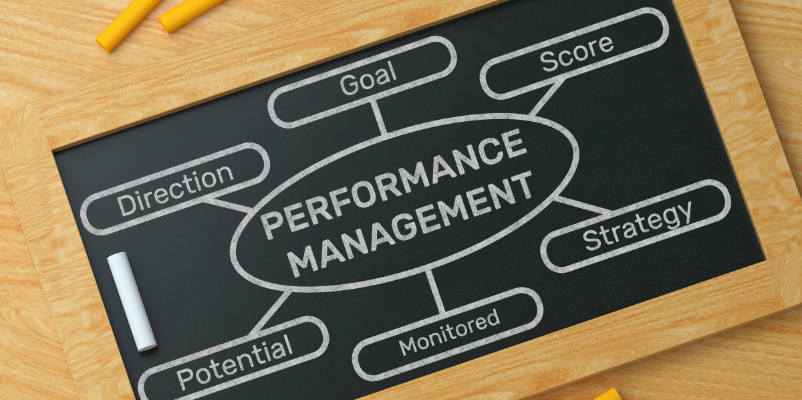
A performance management system is no longer just an HR tool—it has become a strategic driver of productivity, accountability, and business growth in 2025. The way organizations evaluate employees has changed dramatically over the last decade. What was once a slow, paper-driven annual appraisal process has now evolved into a real-time, data-backed decision-making function. In 2025, companies stand at a critical crossroads: should they continue with traditional appraisal methods, or adopt an AI-driven performance management system?
With hybrid work, global teams, and outcome-based performance now becoming the norm, businesses are rethinking how they track productivity, engagement, and growth. This article explores the complete comparison between AI vs traditional performance management, what modern companies prefer in 2025, and how the right performance management system directly impacts business success.
Understanding a Performance Management System in 2025
A performance management system is a structured framework used by organizations to set goals, track progress, evaluate employee output, provide feedback, and support professional development. In 2025, performance management is no longer limited to yearly appraisals. Instead, it focuses on:
- Continuous goal tracking
- Real-time performance monitoring
- Regular feedback and coaching
- Skill development and career planning
- Alignment of employee goals with organizational strategy
Modern organizations demand a system that is real-time, transparent, scalable, and intelligent, which is why technology-driven solutions are gaining widespread adoption.
Traditional Performance Management: How It Works
Traditional performance management relies on fixed evaluation cycles, usually annual or bi-annual. These systems typically include:
- Paper-based or spreadsheet-based records
- Manager-led subjective evaluations
- Static KPIs reviewed once or twice a year
- Limited feedback during the year
- Manual documentation and reporting
Strengths of Traditional Performance Management
- Simple and familiar process
- Low initial technology cost
- Works reasonably well for small teams
- Heavy reliance on human judgment
Limitations in 2025
- Feedback delays reduce improvement opportunities
- Higher chances of personal bias
- Poor real-time visibility of performance
- Not suitable for remote or hybrid teams
- High administrative workload
As organizations become more agile and digitally driven, these limitations have made traditional systems increasingly ineffective.
What Defines an AI-Driven Performance Management System
An AI-powered performance management system uses artificial intelligence and analytics to continuously track employee performance and behavior. Instead of depending solely on manager perception, AI systems use:
- Real-time productivity data
- Work pattern analysis
- Automated goal tracking
- Predictive performance insights
- Continuous feedback mechanisms
Key Features of AI-Based Systems
- Automated performance dashboards
- Continuous goal alignment
- Bias-reduced performance evaluation
- Predictive attrition and engagement insights
- Personalized learning and improvement plans
This shift from retrospective examination to continuous performance intelligence is a major reason companies prefer AI in 2025.
AI vs Traditional Performance Management: Summary Table
| Factor | Traditional Performance Management | AI-Based Performance Management System |
| Review Cycle | Annual / Bi-annual | Continuous |
| Feedback Speed | Delayed | Real-time |
| Data Usage | Manual & limited | Automated & large-scale |
| Bias Risk | High | Low |
| Scalability | Limited | Highly scalable |
| Remote Work Support | Weak | Strong |
| Predictive Analytics | Not available | Available |
| Administrative Effort | High | Low |
| Decision Accuracy | Moderate | High |
| Employee Engagement | Limited | Strong |
Why Companies Are Switching to AI-Based Performance Management Systems
In 2025, speed and accuracy define successful organizations. AI-based systems enable leaders to make faster, smarter, and fairer decisions. Key reasons for the shift include:
1. Need for Continuous Feedback
Employees now expect regular feedback rather than annual reviews. AI systems enable real-time performance feedback, improving engagement and motivation.
2. Data-Driven Decision Making
AI turns performance management from opinion-based to evidence-based, ensuring fairness and consistency.
3. Support for Hybrid & Remote Teams
Modern businesses operate with distributed workforces. AI-based performance tracking offers complete visibility regardless of location.
4. Reduced Managerial Bias
Data captured from multiple sources minimizes subjective judgment in performance evaluations.
5. Faster Skill & Talent Development
AI highlights skill gaps early and recommends targeted learning programs.
Where Traditional Performance Management Still Exists
Despite rapid digitization, traditional systems still survive in:
- Small businesses with limited budgets
- Family-run enterprises
- Organizations with low digital adoption
- Certain government and regulated sectors
These organizations continue to rely on traditional methods due to:
- Lower implementation cost
- Dependence on human judgment
- Resistance to technology adoption
However, even these sectors are gradually transitioning toward digital or hybrid systems.
Impact of AI-Based Performance Management on Employee Experience
A modern performance management system driven by AI positively transforms employee experience by:
- Providing fair, transparent evaluation
- Offering continuous learning opportunities
- Recognizing performance in real time
- Reducing uncertainty around expectations
- Improving trust in appraisal outcomes
Employees feel more engaged when they understand their progress clearly and see that evaluations are data-backed rather than opinion-driven.
Risks & Challenges of AI-Based Performance Management
Despite its advantages, AI also brings challenges:
- Data privacy concerns
- Ethical use of employee data
- Dependence on data accuracy
- Change resistance from managers
- Initial software and integration costs
These risks can be managed through proper governance, transparent data policies, and continuous upskilling of HR teams.
What Companies Prefer in 2025: AI or Traditional?
In 2025, the preference clearly leans toward AI-based performance management systems, especially in:
- IT & software services
- Manufacturing & automation
- Financial services
- E-commerce & digital enterprises
- Global service organizations
Traditional systems are now seen as:
- Reactive instead of proactive
- Labor-intensive
- Poorly aligned with business agility
Most organizations today are either using AI-powered tools or actively planning their transition.
Future of Performance Management Beyond 2025
The future of the performance management system will include:
- Predictive workforce analytics
- AI-driven skill intelligence
- Real-time outcome-linked appraisal
- Automated alignment with compensation
- Deeper integration with learning management systems
Performance management will no longer be a standalone HR process—it will become a core business intelligence function.
Conclusion
The debate between AI vs traditional performance management in 2025 clearly favors intelligent, data-driven systems. While traditional performance reviews still exist in limited environments, they no longer meet the needs of fast-growing, digitally transformed organizations. A modern performance management system must be real-time, unbiased, scalable, and deeply integrated with business operations.
In this evolving HR ecosystem, platforms like Zlendo empower organizations with smart performance management capabilities such as continuous goal tracking, automated appraisals, real-time performance insights, employee development planning, and centralized analytics. By integrating performance management with payroll, attendance, compliance, and workforce management, Zlendo helps businesses build a transparent, high-performance culture that is future-ready.
Disclaimer
This article is provided for informational and educational purposes only. The trends, tools, and comparisons discussed here reflect general industry practices in 2025. Actual results from any performance management system may vary depending on organizational size, data quality, management practices, and technology readiness. This content does not constitute legal, financial, or HR consultancy advice.